
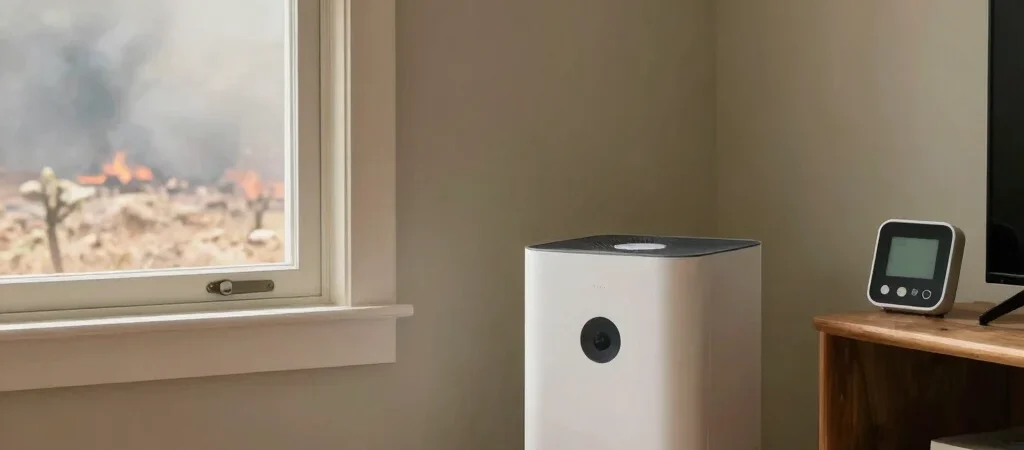
On a smoky afternoon, fresh air is not always cleaner air. Before opening windows or setting up a purifier, check your local air-quality information and note whether outdoor conditions are improving or worsening. The useful routine is one you can adjust to the day, not a device setting you never revisit.
Start with outdoor conditions
When smoke or smog is affecting your area, keeping windows and exterior doors closed can limit how much outdoor pollution enters. If your home has central heating or cooling, check whether the system can run with the fan recirculating and use a filter that the system is designed to accommodate. Follow the equipment instructions for fit and replacement rather than choosing a filter by rating alone.
Choose devices by the room
A portable air purifier is one option for a room where your family spends time; compare its clean air delivery information with the room size and check what replacement filters cost and how often the maker recommends changing them. An indoor air monitor can show trends for the pollutants it measures, but it does not clean the air or measure everything. Neither device replaces checking local conditions or following public-health guidance during a smoke event.
Keep the routine low effort
During poor outdoor air, reduce indoor particle sources where practical, such as smoking, burning candles, or cooking that creates a lot of smoke. When outdoor air improves, ventilate if conditions and your home setup allow it. If this guide includes affiliate links to monitors or purifiers, PureSafeDen may earn a commission; compare room fit, filter availability, and upkeep before deciding whether a device makes sense for your home.